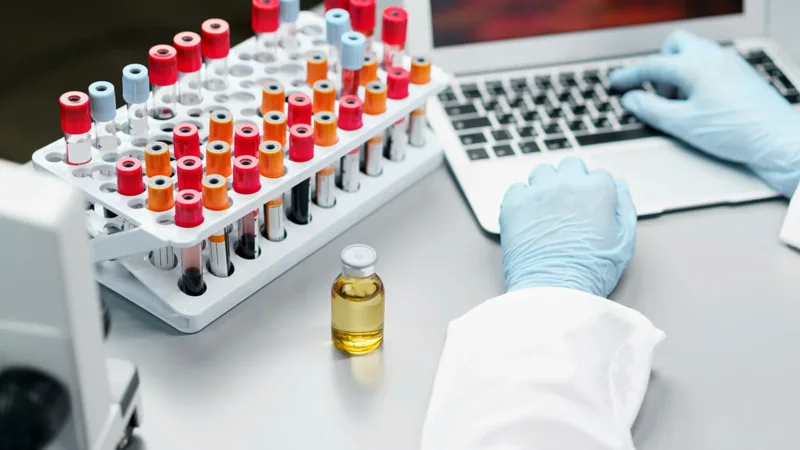

Providing a correct and quality examination report to the patient, good service and the safety of its employees are the main goals for Clinical Laboratories.
When it comes to safety, some bodies have created standards that must be followed by laboratories. The regulations establish attitudes and tasks that reduce the number of accidents in the workplace. The main risks encountered by these professionals are: exposure to blood, excreta/secretions and body fluids. Anvisa/MS and the Brazilian Association of Technical Standards – ABNT, are some of these bodies that have established standards and norms of conduct for laboratories and which will be mentioned below.
RDC 302/2005 Anvisa
According to this regulation, it is important that clinical laboratories create a biosafety manual to train and qualify their staff. In many laboratories, Standard Operating Procedures (SOP) are used, which aim to standardize conduct and minimize the occurrence of errors on a daily basis.
Anvisa defines biosafety as “safety conditions achieved by a set of actions designed to prevent, control, reduce or eliminate risks inherent to activities that may compromise human, animal health and the environment”.
Historical context of the revoked standard. The RDC 302/2005 also requested that biosafety instructions be made available to employees in written form, containing the following points:
- biological, chemical, physical, occupational and environmental safety standards and conduct;
- instructions for use for personal protective equipment (PPE) and collective protection equipment (EPC);
- procedures in case of accidents;
- handling and transportation of material and biological samples.
Standard NBR 14785
This standard was created by ABNT as a form of individual protection for those who work in clinical laboratories and also for their patients. Its objective is to establish safety specifications that can be applicable to clinical laboratories while preserving the integrity of everyone involved.
According to the standard, personnel working in the clinical laboratory must:
- be trained to stop any activities that pose an immediate risk;
- identify and record any security-related issues;
- initiate, recommend or provide corrective actions for any identified risk situations;
- participate and monitor the implementation of corrective actions.
It is extremely important that clinical laboratories invest in adequate and continuous training to ensure workplace safety and quality control.
According to NBR 14785 the work environment must be designed to ensure that biological, chemical, physical, ergonomic and accident risks are avoided or minimized, in order to provide a safe work environment.
Individual and Collective Protective Equipment
The Ministry of Health defines PPE as equipment that serves to protect against contact with infectious agents, irritating and toxic substances, sharp materials and materials subjected to heating or freezing.
According to the body, it is the obligation of clinical laboratories provide individual safety equipment such as: lab coats, gloves, masks, glasses and face shields. It is important to highlight that improper use of this equipment can also cause accidents.
For collective protection there are Biological Safety Booths (CSB) also called laminar flow hoods. These cabins are used to protect professionals and the environment. Some equipment also protects the product being handled, preventing contamination.
clinical laboratories must have first aid kits, necessary for minor injuries and disinfection kits for accidents with biological materials. It is important to highlight that in addition to the kits, the laboratory coordination must provide training for employees on how to handle the products.
Accidents and Care in Clinical Laboratories
The accident champion is the sharps. According to the Academy of Science and Technology Portal the number of accidents with sharps in clinical laboratories varies between 80% and 90%. It is believed that the risks lie in the lack of care and preparation of professionals. This is a high number that can reduce the quality of the work offered by these professionals.
The Ministry of Labor states that every accident must be notified on forms so that all procedures, including legal ones, can be carried out. It is important to highlight that due to several factors, not all accidents are recorded, hence the need to create this culture within laboratories.
In case of accidents, safety professionals clinical laboratories must contact the person responsible so that appropriate procedures can be taken within 24 hours. Blood tests and serological tests must be carried out on everyone involved in the accident.
Humanization of care in clinical laboratories
Providing a correct and quality examination report to the patient must consider much more than good technique and good control. The laboratory has the opportunity to add a fundamental component to its work, which is to offer people truly humanized treatment. From requesting an test to the moment of medical interpretation, patients go through different moments, procedures and instructions in clinical laboratories and, for some, it can be a real epic.
Some may never get used to blood collection, even if they undergo the process frequently.
In Brazil, many patients consider going to the laboratory a “necessary evil”. O clinical laboratory who pays special attention to aspects of humanization when serving their customers, with care and effectiveness, will in fact be creating value in their work, for that direct customer who is their patient, reducing their feeling of “necessary evil”, which will increase their loyalty.
"We think too much and feel too little. More than machines, we need humanity. More than intelligence, we need kindness and understanding." Charlie Chaplin.
Patient preparation
It should be the first step and in fact the approach to the patient who has received a request from their doctor for tests, although it doesn't always happen that way. At this stage, a good way to guarantee a more humanized service is to welcome and correctly provide guidance to customers. The patient must receive information from the laboratory such as fasting time, physical exercise, alcohol consumption, among others. The PALC (Clinical Laboratory Accreditation Program) indicates that these guidelines must be provided in writing, when the client is responsible for the collection, providing verbal provision for simple instructions. The DICQ, 2011, establishes that “INSTRUCTIONS FOR MATERIAL OR SAMPLE COLLECTION BY THE PATIENT/CLIENT THEMSELVES MUST BE MADE AVAILABLE IN WRITTEN AND/OR ORAL FORM, IN ACCESSIBLE LANGUAGE”. Verbally or in writing, the laboratory must ensure that patients have no doubts regarding pre-examination care. Taking good care of this stage will improve reception.
Initial service
The patient's arrival at the laboratory environment is surrounded by mysteries for him. Presenting a safe environment, locating and answering customer questions in a timely manner is essential to generating trust and demonstrating laboratory organization. Providing clear information, on posters, signs or by prepared people, informing about registrations, passwords and the test location, are attitudes that help to calm the client in addition to creating a good welcoming atmosphere. If the laboratory has a charismatic person to work in the patient arrival area, greeting them with kindness, as soon as possible, calling them by name, smiling and looking at them, guiding them even in the simplest situations, it is a difference in favor of humanization.
Attitudes during collection
The blood collection is often the most critical moment for many patients. Sometimes they are the healthiest, during periodic examinations they are more prone to undesirable reactions, such as lipothymia. The clinical laboratorymust guide its employees, through training and improvement, regarding best practices at this time. We have had a lot of experience with patients who have lipothymia every time they undergo collection. If the laboratory is aware of this susceptibility, it can offer a different treatment to its client, for the collection.
Good conduct in the collection environment must be treated with attention. A humanized care must always prioritize the well-being and safety of the patient . He is careful to judge the laboratory/employee from his own point of view, based on what he believes are the critical points for the quality of his tests. Therefore, conversations and distractions should be avoided at the time of collection. Attitudes of dedication and concentration help to convey credibility in addition to preventing the patient from feeling just another person and undervalued. For the collector, accustomed to the same job for years, this may be a banal moment, but for the customer it is always a special moment.
Coping with possible situations
Patients' special situations, such as lipothymia, even though they are not frequent, bring great inconvenience, especially if noticed by other clients. The collection staff can approach the customer about the topic beforehand and determine if they are a susceptible customer. It may be better to conduct a collection surrounded by more care, in a special environment, with the patient lying down, carried out by a more trained and more charismatic professional, etc. We must take care that our actions do not add suffering to those who are already weakened.
Occasionally, some customers may request that the attendant interpret the test result when receiving the result. We suggest that the laboratory instruct its employees to never interpret, to politely indicate that the patient clarifies with his doctor, who is the most appropriate person to interpret his results. If the laboratory wishes to add value to the service, it can provide a brief contact between the patient and the supervisor, doctor, biomedical or biochemist, asking them to talk to the customer. Even though he gives the same guidance of waiting for the interpretation by the attending physician, he will offer, with his presence and reassuring speech, a greater welcome and reduction of anxiety.
The quality of humanized laboratory care favors patient loyalty to the laboratory. The tip from QualiChart is to draw attention to the importance of creating welcoming differences favorable to patients, in terms of what they perceive and feel, avoiding the trivialization of the care process.