
The accreditation aims to guarantee the quality of laboratory services, ensuring the quality of diagnoses, prognoses and treatments for Brazilian citizens. This shows customers and other interested parties that the company is providing a quality and reliable service, certified by a recognized entity.
The process is periodic and voluntary, in which an institution evaluates a laboratory through audits, and determines whether it meets predetermined requirements to perform the tasks it proposes.
An accredited laboratory shows that it carries out work with technical competence, which makes it stand out from others that are not.
Accreditation is a periodic external assessment process of the structure, processes and results of a company, organization or institution in relation to quality standards or requirements accepted in Brazil and other countries, which aims to continuously improve the quality of the services offered.
It is important to emphasize that the external evaluation of Accreditation is a Voluntary, Confidential, Independent and Periodic process .
Being accredited is a great benefit for the laboratory, which receives, in addition to the distinction of having quality, the gain arising from the engagement and pride of its employees, knowing that they are carrying out their work correctly and in accordance with appropriate standards, for better results for patients.
ANS Normative Resolution
In August 2011, the National Supplementary Health Agency (ANS) published the Normative Resolution of n˚267. This resolution established QUALISS, the “Health Service Provider Qualification Disclosure Program”. It aims to provide customers with necessary information about the performance of their service providers. In this way, it brought advantages to laboratory customers, by allowing them to find the appropriate laboratory that brings them trust, credibility and satisfaction.
For specific accreditation of Brazilian clinical laboratories, there are the following bodies: ONA, PALC, DICQ. We will deal here with the two most well-known ones: PALC and DICQ:
PALC accreditation program
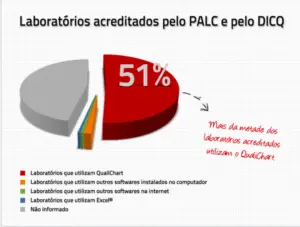
is the Clinical Laboratory Accreditation Program of the Brazilian Society of Clinical Pathology/Laboratory Medicine (SBPC/ML). It was launched in 1998 and has a large number of accredited laboratories, whose total number of tests carried out makes up 30 to 40% of the total number of tests carried out in the country. The program aims to evaluate actions that result in less variable, more efficient and safer laboratory processes, which translate into more reliable test results, with benefits for patients and the healthcare system.
The new PALC standard was launched in 2021, with a critical review of the previously existing requirements, with the aim of improving them and making them clearer, also considering the transformations seen in the clinical laboratory segment.
DICQ accreditation program
It is the Department of Inspection and Quality Control of the Brazilian Society of Clinical Analysis (SBAC), which launched 7th edition of its Manual for Accreditation of the Quality Management System of Clinical Laboratories. The program was initially launched in 1997 and since then aims to offer Clinical Laboratories a way to obtain accreditation of their quality management system, making it possible to demonstrate their quality and technical competence before the Health Authorities, Health Service Purchasing Companies and the Community.
In its evolution and maintaining the acronym DICQ – National Accreditation System, sponsored by SBAC – Brazilian Society of Clinical Analysis, it has the prerogative of auditing and issuing Accreditation Certificates to the country's Clinical Laboratories, based on National and International Standards, specifically designed for the quality management of Clinical Laboratories.
Internal Quality Control
A quality can be quantifiable and investing intelligent efforts in this regard is inherent to good practices in Clinical Laboratories. It is essential to take care of quality of the results, keeping in mind that the greatness and relevance of the role of each professional in society makes efforts to have quality. This noble attitude is the way to make an honest and valuable contribution to the excellence of diagnoses and medical procedures.
Carrying out Quality Control is important for the benefit of patients and for the professional to have more confidence in their results. The laboratory incorporates scientific concepts and methods, raises the level of its operations and increases pride and satisfaction among its employees. Carrying out correct and adequate Internal Quality Control is mandatory to meet the requirements of accreditation programs, being an important step towards achieving recognition.
DICQ Requirement for Internal Control
5.1.1 – THE CLINICAL LABORATORY MUST HAVE A QUALITY PROCEDURE DETERMINING THE GUIDELINES FOR AN INTERNAL QUALITY CONTROL PROGRAM COVERING ALL ANALYTES PERFORMED.
PALC Requirement for Internal Control – REQUIREMENTS 11.1 TO 11.9
11.2 – THE INTERNAL QUALITY CONTROL PROGRAM (PCIQ) MUST COMPREHENSIVELY AND DETAILY INCLUDE THE INTERNAL QUALITY CONTROL SYSTEM FOR ALL QUALITATIVE AND QUANTITATIVE ANALYZES CARRIED OUT. THE PROGRAM MUST ENABLE THE INVESTIGATION OF ALL CAUSES OF VARIABILITY THAT MAY OCCUR IN EACH ANALYTICAL SYSTEM.
Another important motivation that laboratories have demonstrated is obtaining recognition, that is, becoming an accredited laboratory.
Accreditation is a periodic external evaluation process of the structure, processes and results of a company, organization or institution in relation to quality standards or requirements accepted in Brazil and other countries, which aims to continuously improve the quality of the services offered. It is important to highlight that external evaluation by Accreditation is a Voluntary, Confidential, Independent and Periodic process. (PALC Standard 2013)
The best way to achieve the goal of accreditation is to take care of the organizational development of your laboratory. Assessing broadly and methodically, identifying problems, adopting corrective actions represent the safe steps to obtain the best results. You can carry out these processes with your own team, or by hiring an external consultant, dedicated to assisting in organizational development.
To plan improvements, you need to:
- Evaluate the laboratory as a whole;
- Collect data;
- Define problems, objectives and goals;
- Survey the provisions and standards of the relevant legislation;
- Raise existing quality standards;
- Establish ways to comply with legislation and standards.
Internal audits help evaluate facilities and processes with a previously defined list of requirements. Choose the current standard applicable to the service or the edition of the accreditation program adopted. Record evidence and actions for points that were not addressed. See the current IQC requirements.
Carrying out an internal audit means knowing and highlighting opportunities for improvement. From there, a Corrective Action Plan must be established for the nonconformities found, taking action and raising the level of laboratory development.
Are expected outcomes when you perform internal audits
- Deep and expanded knowledge of the laboratory and its processes;
- More efficient and effective operations;
- Greater ability to recognize and reduce errors;
4- Greater chance of meeting customer expectations;
5- Greater chance of success in inspections by Anvisa and accreditation entities;
6- Sustained compliance with quality objectives.
Achieving recognition and accreditation should be goals for all laboratories, which will then be able to demonstrate to their customers how reliable they are. Efforts in this direction are commendable and the first steps must be in the adequate evaluation of the laboratory, which can begin with internal audits.
Audits in the Clinical Laboratory
The laboratory is a complex entity, which deals with human aspects of great importance, high scientific aspects, work methods that involve high technology and very relevant human participation. Numerous processes are required to achieve the objectives and for many of them, plans must be drawn up. Standard Operating Procedures (POP), to ensure that they are always carried out as defined, without failure. Making sure that the laboratory meets the requirements of complex legislation and the postulates of scientific standards should not be just an intuitive attitude. It is necessary to use a method to perform audits in the clinical laboratory and verify that the laboratory complies with standards from specialized organizations. Having a good method for recognizing opportunities for improvement makes all the difference in an organization that wants to prosper, scientifically and financially.
A laboratory that is already at a good level of maturity in its corporate governance will know that this work of carrying out audits is fundamental. You may already have a consultant to organizational development and several actions have been developed, sometimes with the accreditation already conquered. Other organizations are at an earlier stage and may prefer to start with a “do-it-yourself” approach, where the laboratory performs lower-cost audits for your initial organization. This is when, for example, you want to confirm your status in compliance with health legislation, or find out how well you already adhere to the quality standards recommended by scientific laboratory entities (SBAC and SBPC/ML).
Steps to deploy and conduct audits
1. Define your main objective
The ideal is for you to evaluate your laboratory today, carrying out an “x-ray” of it and planning what do you intend for a future time. Imagine what goals you want to achieve, with the resources you have and the external conditions, both favorable and unfavorable. There is an interesting method that can be used at this time to help you, which is creating the SWOT matrix. Through this simple method, you are encouraged to think about your organization, highlighting its most positive points (Strengths) and also its negative points, or opportunities for improvement (Weaknesses). Try reading more about the application of this method.
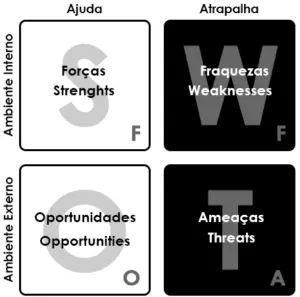
Assess internal strengths and weaknesses and the external context of the laboratory. Use the audit to define priorities and improvement plans, with accountability and verification of effectiveness. When the scope is sanitary, consult RDC 978/2025 and its amendments. See the current IQC requirements.
2. Create an audit team
Audit work should rarely be restricted to just one person. Especially because, because it is broad, it could compromise that person in relation to their other activities, as well as require knowledge from them that they may not have in such a comprehensive way. It can be seen that defining a team is an important aspect to consider.
Before creating your team for audits, you must think about the necessary infrastructure to enable the work. Without this preparation, there is a risk of seeing the team disperse, without focus, without direction and without clarity regarding the objectives to be achieved. See more about a method to facilitate audits in clinical laboratories.
- Be a leader and start by creating the participation of employees in the audit team, preferably on a voluntary basis, or by making the choices yourself, with discreet ways of awakening motivation in them.
- Define the audit reference and its editing. For the sanitary scope of the services covered, use Anvisa's current requirements; for accreditation, use the standard of the chosen program. See the current IQC requirements.
- Develop the spirit of searching for problems and causes, clearly showing that the laboratory's objective is to evolve to provide the best service, with quality and within compatible deadlines.
- Identify one method, or work tool, that can help the team with clarity in processes and with evidence of achieved and pending results. We suggest the LiVer program. Make this method available for the team to work with.
- Identify external consultants who can contribute to the initial organization and practice formulation for audits. Ask a consultant for the levels of contribution he could offer you and the budget.
- Develop local members to take more initiative in reading texts, collecting and analyzing data, and searching the internet.
- Ensure sponsorship from senior management, which is a fundamental element for the success of audits.
One of the team members will be the Internal Auditor (AI), who at the beginning and during the work takes on the role of leader. This could be the owner of the laboratory, or another designated person. The internal auditor will have greater familiarity with the work method, will be responsible for scheduling and conducting meetings and will present activity evolution indicators to management.
3. Establish the Big Picture
It is always important to define the General Picture before starting the project. Teams are more effective if everyone is clear about the reasons for their work and the objectives they want to achieve. The general framework, defined by the administration, the delimited scope of the work, the deadlines for completion and the people involved and who will receive assignments constitute necessary elements and are the initial milestone of the process.
One way to establish references is to define a clear commitment for the team, which as an example, could be:
- Goal: evaluate compliance with current requirements applicable to the laboratory. See the current IQC requirements.
- Method: carry out an audit with criteria and evidence defined based on the current reference chosen. See the current IQC requirements.
- Term: Three months, from 07/01/2015.
- Team involved: Fulano, Sicrano, Beltrano
- Internal Auditor (AI): So and so
4. Perform audits in the Clinical Laboratory
At all stages of the audit process in the clinical laboratory, the simplest working method is to hold meetings to discuss the items to be addressed.
There are three types of meetings, which are suitable for work-related moments, as we will describe below. A first and special session must be carried out to present the general picture as suggested above and the objectives set out by management. Team members will be appointed with distribution of roles and initial responsibilities for each one. At this opening meeting, management, through its representative, will define who the Internal Auditor (AI) will be and their role as team leader.
Audit conduct meetings
The work will be carried out through meetings, when the team will discuss each of the requirements on the chosen list. We suggest that meetings be of three types:
- Meetings to evaluate the requirements on the list defined in the General Framework and mark them according to the criteria of Meets, Does not meet and Does not apply. These meetings must have a defined periodicity, with an interval never exceeding one week. The requirements from the chosen list will be evaluated, according to their categories, marking the laboratory's situation in relation to that requirement in the program. At the end of checking all requirements, the audit will be ready, in a survey phase;
2. Meetings to create the Corrective Action Plan (PAC) on the items not met, with assignments of responsibilities and deadlines to employees, team members. They will be fewer in number than type 1 and the participants will certainly already have a greater degree of maturity and productivity. The assignments will be addressed and marked in the program, in the model 3W1H (the acronym in English for what, who, when, how);
3. PAC monitoring meetings, to evaluate the progress of actions and solutions, seeking to support those responsible and ensuring compliance with corrective actions. Very important to help correct course, make the necessary adjustments and ensure that the goal will be achieved within the deadline defined in the general framework. The composition for these meetings can be made up of the whole team, or only those responsible for group requirements solutions can participate. The participation of someone from the administration is very interesting at this moment.
Some ideas must be addressed for good results from audit team meetings:
- In the first meeting, the role of each member is defined and why they participate;
- The decision model is defined as Decision by Consensus, with respect for the opinions of each member and everyone seeking the ability to listen;
- The work agenda is established, as far as possible and compatible with the laboratory routines and the needs to respect the deadlines established to achieve the goal;
- Regular meetings are supported by the discipline that the AI must always seek to maintain: scheduled date, unchangeable start and end time, punctuality for the start, as well as for the end of the same;
- The agenda must be planned, with which category(ies) of requirements will be discussed at that meeting. The working method, that is, the computer program for audits, helps a lot to maintain rhythm and discipline;
- Brief minutes of each meeting must be kept in a specific book, with a record of the participants, the subjects discussed (the categories of requirements), the start and end date and time. Minutes are a recording method that greatly assists the AI;
5. Perform periodic audit reviews
The administration must ask the AI to present a report demonstrating the referrals. The AI must extract evolution indicators from the program and present the following:
- Number of meetings already held;
- Total number of items already evaluated;
- Number of items serviced by laboratory;
- Number of items unfulfilled (Non-conformities);
- Attendance data of participants, team members.
6. Work on problem solving – Corrective Action Plan
Once the items on the list that the laboratory does not meet have been identified, that is, the Nonconformities, they will constitute the list of items to be worked on. A Corrective Action Plan (PAC) is then created, which aims to work to resolve those non-conformities.
A plan for the audit must be created, and meetings of the second type must be held. In them, the AI will present each of the non-conformities (What) and assign the members the responsibility to search for solutions, individually or together with other members of the laboratory. There must always be someone responsible for a specific item (Who), a definition of what must be done (How) and a deadline for presenting the solution (When). The LiVer program creates this PAC and shows progress indicators, with pending items and those that have already had the necessary correction.
The third type of meetings will be to evaluate the progress of the PAC, the difficulties faced by those responsible and how each person can contribute to the solutions. These meetings are very important because at the end the work will be completed, with all the nonconformities resolved. The laboratory will thus be on another level of organization, taking into account the postulates in the list used.
The AI must periodically present the PAC results to management, with the following indicators:
- Number of Nonconformities that make up the PAC;
- Number of Nonconformities with solutions already forwarded;
- Number of nonconformities in arrears;
- Non-conformities requiring management action
When finalizing the corrective actions with your team, the internal AI will be able to hand over the task, completing the audit process for continuous improvements. The audit will remain recorded and can be reviewed periodically and many others can be created.
If the laboratory aims to seek accreditation, it can choose the DICQ program, or the PALC and carry out an audit according to the list of the chosen program. This way, you will realize the ideal moment to seek accreditation for your laboratory, choosing one of these two programs mentioned.