
A common view, with the context of each unit.
Laboratory networks need to query the set without erasing differences between units. A trend observed in a piece of equipment calls for specific investigation; a repetition in different units may indicate a shared process to be evaluated. The first step is to make registrations, responsibilities and records understandable for all teams.
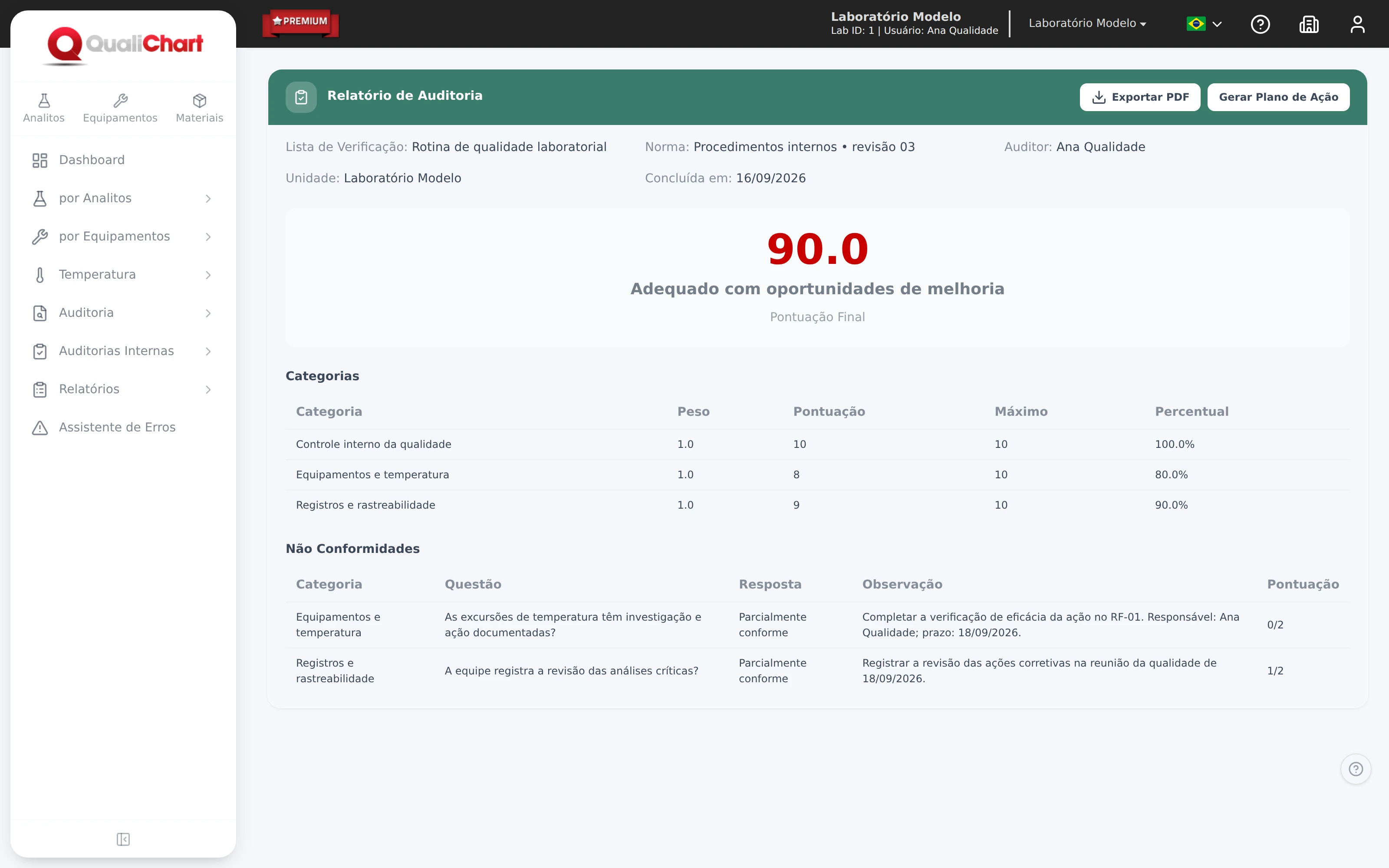 Enlarge screen
Standardize what will be compared
Review analyte names, units of measurement, materials, batches, and equipment identification. Define criteria for reviewing data and explain when controls from different systems can be compared. A multi-unit panel does not establish analytical equivalence between methods by itself.
Distribute responsibility without dispersing information
Establish who records the local occurrence, who reviews it and when the coordination should follow up. Keep the hypothesis, intervention and its effectiveness linked to the control history. In reports and audits, look for evidence of completion in addition to the count of open records.
Try a staged deployment
Choose a unit and a set of controls to validate records and procedures. Document the adjustments and use the learning to guide others. In the demo, describe the number of units and equipment, the data entry mode, and the required access profiles. This information determines the scope of the proposal.
Learn from a published experience
In the report from the Paulo C. Azevedo Laboratory, technical manager Silvana Pires highlights the vision of control between units and the possibility of anticipating problems by consulting the data. Read the case to understand the context; it does not represent a promise of equal results for any network.
Read the case of the Paulo C. Azevedo Laboratory.
Prepare your assessment
Gather the number of units and equipment, who will use the system and how the data reaches the team. The values depend on this scope and are upon request. Compare the plans and request a demo for your scenario.
Other routines: IQC for small laboratories · IQC for hospital laboratories · IQC for laboratories undergoing accreditation · IQC in the veterinary laboratory