

1- Pre-analytical Phase
Carrying out the laboratory test goes through three different stages. Professionals in clinical laboratories must pay attention to each of them and seek to improve them. The main objective is to determine the concentration or activity of analytes in a biological material, obtaining a quality report and preventing patients from receiving an incorrect result. During the first, or pre-analytical, phase, attention to the patient and care with the procedures for obtaining the material, or sample, are ways of ensuring quality in the laboratory.

Numerous professionals from different areas are involved in this first phase. Research states that around 70% of errors that occur in clinical laboratories occur in the pre-analytical phase. It is known that these errors can be minimized if professionals are committed and attentive to the procedures. The pre-analytical phase is made up of five steps. Each of them will be addressed below.
Exam Request
The process for carrying out laboratory tests begins with the request for an test, usually done during the medical consultation. It is necessary for the doctor to correctly describe the desired request. As much information as possible in the order always helps when taking the test . The doctor's request occurs mainly for two reasons: to confirm or reject a diagnosis or to obtain parameters for monitoring. It is for this reason that a correct request and result greatly assist in the appropriate decision to conduct the treatment of patient .
Patient Preparation

This stage is for patient guidance and care. At this point pre-collection the patient must receive all the information necessary to carry out the test and one should not wait for the instructions to be given by the doctor, but rather by the laboratory . The patient must receive information from the laboratory about fasting time, physical exercise, consumption of alcoholic beverages, among others.
The PALC (Clinical Laboratory Accreditation Program) indicates that these guidelines must be provided in writing, when the client is responsible for the collection, providing verbal provision for simple instructions. The DICQ, 2011 establishes that “INSTRUCTIONS FOR MATERIAL OR SAMPLE COLLECTION BY THE PATIENT/CLIENT HIMSELF MUST BE MADE AVAILABLE IN WRITTEN AND/OR ORAL FORM, IN ACCESSIBLE LANGUAGE”.
Examples of tests for which written instructions are recommended:
-
- Functional hormonal tests;
- Urine tests: routine analysis, culture, and measurements from timed collections;
- Occult blood test and functional digestive tests;
- Spermogram and semen analysis;
- Expectorated sputum collection;
- Collection of microbiological tests in hospitals.
Verbally or in writing, it is certain that the laboratory must take care that the patients have no doubts about pre-test care. Fasting time, ingestion of alcoholic beverages, types of medications that should not be consumed, among others, can directly interfere with the quality of the material collected. The clinical laboratories must qualify and prepare their employees to reduce any type of error at this time.
Patient registration is another task performed at this stage. Personal details must be correct to reduce the risk of errors, particularly in identifying the patient and the collected sample. The receptionist should check that this information is consistent when scheduling the test and providing instructions. This is an important opportunity for the laboratory to offer more patient-centered care.
Collection
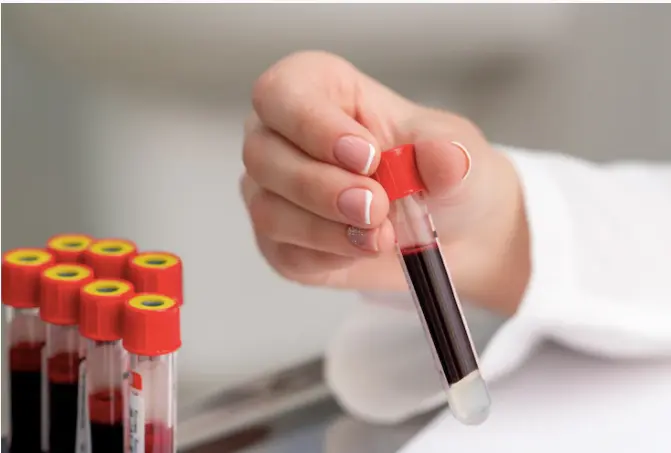
Obtaining the biological sample is most often done through blood collection and can be the most stressful moment for the patient. Professionals must act with care and attention. Following specific collection protocols helps to reduce errors that could occur at this stage. If any data necessary for good performance is missing, the problem must be remedied or collection postponed until all information is correct. The preparation and organization of equipment and professionals are also extremely important for the quality of the work provided at this time. The most common failures are:
- insufficient sample;
- sample in incorrect tube;
- inadequate sample;
- incorrect identification (of patient and sample).
After obtaining the samples, another precaution is to send them within the appropriate deadlines to ensure the quality of the material for analysis.
Transport
The last step of the pre-analytical phase has as its first step the good storage of the collected material. Correct identification and containers prevent altered results and also the loss of material. It is important to use suitable suitcases, adapted vehicles, control the time and temperature relationship to which the material is exposed, use appropriate bottles, all with safety and preservation in good condition of the biological material for analysis in mind.
Historical context of the revoked rule. The RDC 302/2005 of Anvisa predicted in paragraph 6.1.10: THE PATIENT SAMPLE MUST BE TRANSPORTED AND PRESERVED IN A CONTAINER ISOTHERMAL, WHEN REQUIRED, SANITIZABLE, WATERPROOF, GUARANTEING ITS STABILITY FROM COLLECTION TO EXAMINATION, IDENTIFIED WITH THE BIOLOGICAL RISK SYMBOLOGY, WITH THE SAYING “DIAGNOSTIC SPECIMEN” AND WITH THE NAME OF THE LABORATORY RESPONSIBLE FOR THE SHIPPING.
It is important that the vehicle has written information in cases of accidents. Shaking the samples should be avoided. All materials must be handled by people wearing safety equipment. Transport to the technical area must be efficient and fast.
Preparation
The following are part of the preparation phase:
- Handling bottles and tubes for proper internal routing;
- Judging the quality of the samples, which must be made in each process at this stage;
- Centrifugation, aliquoting and internal distribution for the analytical sector.
Historical context of the revoked standard. According to RDC 302/2005, 6.1.3 THE CRITERIA FOR ACCEPTANCE AND REJECTION OF SAMPLES, AS WELL AS THE PERFORMANCE OF EXAMINATIONS ON SAMPLES WITH RESTRICTIONS MUST BE DEFINED IN WRITTEN INSTRUCTIONS.
If a sample is accepted with restrictions, this observation must be included in the report.
2- Analytical Phase
In this second phase of the laboratory tests, the collected material is analyzed. There are several processes involved in this phase, depending on the analytical method used, the involvement of people and, above all, the use of control methods to guarantee more accurate results.
Analysis
After the material is collected and properly prepared, the laboratories begin the material analysis process. The healthcare professionals must pay attention and learn in depth the analytical systems they employ, the Standard Operating Procedures (SOP) of equipment and method, in addition to the control method adopted, such as statistical process control. Although the analysis is often based on an automated system with high technology, there is a need for professional action, which is of fundamental importance to guarantee the quality of the results. Part of your work at this stage is:
- checking instruments and reagents;
- checking the control status of systems;
- monitoring of analysis processes;
- soroteca maintenance.
The professional who knows his systems well will have already identified the critical points that require greater care, with established checking protocols for preventive action. It will also regularly monitor tests using Internal Quality Control methods, because all measurement procedures are subject to variations. The purpose of IQC, which is statistical process control, is to seek to ensure that the performance of methods is maintained within the expected limits of variation. It is important to be able to count on instruments, inputs (reagents, calibrators, reagent water) and evaluation tools, suitable to efficiently execute the analytical phase.
Quality control allows you to monitor the analytical process and investigate deviations. The IQC and CEQ requirements must be consulted in the current sanitary framework and applied according to the service.
Because it occurs in the daily life of a laboratory, IQC brings the entire team closer to analytical processes, which makes it easier to analyze possible deviations in control and find the causes. The efficiency of the internal control method will make a difference in the set of benefits that can be obtained from this practice. Do good control good is an organizational development factor, making quality a benefit for the clientele, the laboratory and its staff.
After carrying out analysis of the internal control and being considered compliant, analyzes of patient samples are carried out.
Data Flow
The results obtained from patient samples will be carefully transported to the computer, or through the SOFTWARE interface between the analyzer and the Laboratory Informatics System (LIS). The test results must be verified and released by higher-level personnel: doctors, biochemists, biomedics, before being released to the next phase. If the interface program or the SIL allows it, the release can often be done electronically, which is especially valuable when processing a large number of samples.
The data flow involves the analytical phase and the post-analytical phase. The first is because some checks may imply the need to re-analyze the patient's sample if the result is not considered acceptable. The criteria for checking results must be documented in the SOP and must include “delta check” and critical level analysis. The latter is often considered as belonging to the post-analytical phase but, as it is carried out by higher-level personnel and involved in the analytical processes, it can also be understood as belonging to this phase.
3- Post-analytical phase
After collecting the material and analyzing the data, the laboratory examination goes through the last stage, the post-analytics. It contains shipping and interpretation of results and consequently the diagnosis and treatment.
Historical context of the revoked standard. According to RDC 302/2005 of Anvisa: 4.20 POST-ANALYTIC PHASE: PHASE THAT BEGINS AFTER OBTAINING VALID RESULTS OF THE ANALYSIS AND END WITH THE ISSUANCE OF THE REPORT, FOR INTERPRETATION BY THE REQUEST. However, many consider this phase as an extension to the process of using the information for medical decision-making.
The post-analytical phase materializes in the test report. Their quality as media and content for the information they represent must deserve great care. The report must make tangible what we know as quality, for those end customers: Patients, Doctors, Service Buyers.
The steps of this phase:
- Preparation of test reports;
- Printing or transmitting the report;
- Receipt of the report;
- Decision making;
Preparation of the patient report
Historical context of the revoked standard. Once the results are approved and released, the data is used to prepare the report. This process is carried out by the Laboratory Information System, which must follow current legislation. The DRC takes care of the aspects of the report with great care. We will transcribe some items from Anvisa's RDC 302/2005 regulation, cited here for historical reference:
6.2.10 THE REPORT ISSUED BY THE SUPPORT LABORATORY MUST BE AVAILABLE AND ARCHIVED FOR A PERIOD OF 5 (FIVE) YEARS.
6.3.1 THE CLINICAL LABORATORY AND THE LABORATORY COLLECTION POINT MUST HAVE WRITTEN INSTRUCTIONS FOR ISSUING REPORTS, WHICH COVER ROUTINE SITUATIONS, SHIFT AND EMERGENCIES.
6.3.2 THE REPORT MUST BE LEGIBLE, WITHOUT TRANSCRIPTION ERASURES, WRITTEN IN PORTUGUESE, DATED AND SIGNED BY A LEGALLY QUALIFIED HIGHER LEVEL PROFESSIONAL.
6.3.3 THE REPORT MUST CONTAIN AT LEAST THE FOLLOWING ITEMS:
A) IDENTIFICATION OF LABORATORY;
B) LABORATORY ADDRESS AND TELEPHONE;
C) IDENTIFICATION OF THE TECHNICAL RESPONSIBLE (RT);
D) NO. REGISTRATION OF THE RT WITH THE RESPECTIVE PROFESSIONAL CLASS COUNCIL;
E) IDENTIFICATION OF THE PROFESSIONAL WHO RELEASED THE EXAM;
F) NO. REGISTRATION OF THE PROFESSIONAL WHO CLEARED THE EXAM WITH THE RESPECTIVE PROFESSIONAL CLASS COUNCIL;
G) NO. REGISTRATION OF THE CLINICAL LABORATORY WITH THE RESPECTIVE PROFESSIONAL CLASS COUNCIL;
H) CLIENT'S NAME AND IDENTIFICATION RECORD IN THE LABORATORY;
I) SAMPLE COLLECTION DATE;
J) REPORT ISSUANCE DATE;
K) NAME OF EXAM, TYPE OF SAMPLE AND ANALYTICAL METHOD;
L) EXAM RESULT AND MEASUREMENT UNIT;
M) REFERENCE VALUES, TECHNICAL LIMITATIONS OF THE METHODOLOGY AND DATA FOR INTERPRETATION;
N) PERTINENT COMMENTS.
6.3.4 WHEN A RESTRICTED PATIENT SAMPLE IS ACCEPTED, THIS CONDITION MUST BE INCORPORATED IN THE REPORT.
6.3.5 THE CLINICAL LABORATORY AND THE LABORATORY COLLECTION POINT THAT CHOOSE TO TRANSCRIPT THE REPORT ISSUED BY THE SUPPORT LABORATORY MUST GUARANTEE THE RELIABILITY OF THE EVEN, WITHOUT CHANGES THAT COULD COMPROMISE THE CLINICAL INTERPRETATION.
6.3.6 THE PERSON RESPONSIBLE FOR RELEASING THE REPORT CAN ADD INTERPRETATION COMMENTS TO THE SUPPORT LABORATORY TEXT, CONSIDERING THE PATIENT'S STATUS AND THE CONTEXT GLOBAL OF EXAMS OF THE SAME.
6.3.7 THE SEROLOGICAL DIAGNOSIS ANALYSIS REPORT OF ANTI-HIV ANTIBODIES MUST BE IN ACCORDANCE WITH MS ORDINANCE No. 59/2003, ITS UPDATES OR OTHER LEGAL INSTRUMENT THAT MAY REPLACE IT.
6.3.8 COPIES OF ANALYSIS REPORTS AS WELL AS RAW DATA MUST BE ARCHIVED FOR A PERIOD OF 5 (FIVE) YEARS, EASILY RETRIEVABLE AND IN A FORM ENSURE ITS TRACEABILITY.
6.3.8.1 IF THERE IS A NEED FOR CORRECTION IN ANY DATA CONTAINED IN THE REPORT ALREADY ISSUED, THE SAME MUST BE MADE IN A NEW REPORT WHERE THE CORRECTIFICATION HAS BEEN MADE CLEAR.
For item 6.3.4, the ideal is to include information that can warn about possible interferers, such as:
- “hemolyzed sample”;
- “icteric sample”;
- “lipemic sample” or
- others as “opalescent”, “cloudy” or abnormally colored.
The report must indicate the situations in which the analysis was carried out despite sample restrictions, and possibly whether the sample was subjected to pre-treatment.
Printing or transmitting the report
There is a strong movement for the electronic transmission of the report to surpass the still far superior use of printing the report. Aspects of digital certification are under discussion and it is likely that rigor in this regard will soon be implemented for electronic transmission. There are many ways to make this more present than currently, making the arrival of information to the doctor more agile. In a hospital environment, this practice is highly recommended, because it reduces the total “TURN AROUND TIME – TAT”, which is especially valuable in emergencies.

The electronic communication of reports promotes cost reduction for the parties involved:
- For the laboratory, there is less spending on printing, paper, ink and printer, with staff to take care of this process and storage facilities, etc.;
- For the patient, mainly because it eliminates the need to travel to the laboratory, even if he has to pay for printing at home. If the report was analyzed by the doctor on his computer, this cost would not be incurred, saving natural resources.
Receipt of the report
The recipient of the results is the attending physician, who has the most ability to deal with the information. Laboratory professionals are the providers of information obtained from analyses, represented by reports. The clinical laboratory must have scientific advice to clarify doubts or even recommend repeats of the analysis. Therefore, it is necessary to save the samples in case it is necessary to repeat them. At this point, the greater the laboratory professional's confidence in their results, the more meaningful the advice will be. Taking care with the three phases of laboratory tests will be valuable for the professional to talk about assured quality, which is the outcome of all efforts towards quality in the different phases. This is what is expected of him as a laboratory specialist. The Quality Control is one of the pillars supporting the relationship between the laboratory professional with the assistant doctors, for quality assurance.
Decision making
When requesting a test, the clinician expects that a reliable result will be provided at the most opportune moment, which will guide their decision-making. The steps between these two ends, requesting the test and receiving the result, are beyond your knowledge and are quite complex. The laboratory houses a vast arsenal of resources, the understanding of which escapes those who do not work directly in its processes. It is seen by many clinicians as a “black box”, where one person places the request and the sample and another makes the final product come out: the result.
Most of the time, the clinician requests the laboratory's participation in two situations:
- to confirm, or to reject a diagnosis from a clinical impression;
- to obtain parameters that guide treatment control.
Other indications for examinations are to establish prognosis; for screening patient groups and detecting risk factors.
Upon receiving the report of the analyzes requested by him, the doctor has in his hands the best that the laboratory could deliver. With this report you will make your decisions. It is believed that these reports guide around 70% of medical decisions.
The post-analytical phase closes the cycle, bringing in a synthetic way in the report the efforts of a specialized team, diverse resources, high technology, used to contribute to health, or minimizing harm to the patient. Society thanks the laboratories.
BY DR. SILVIO BASQUES