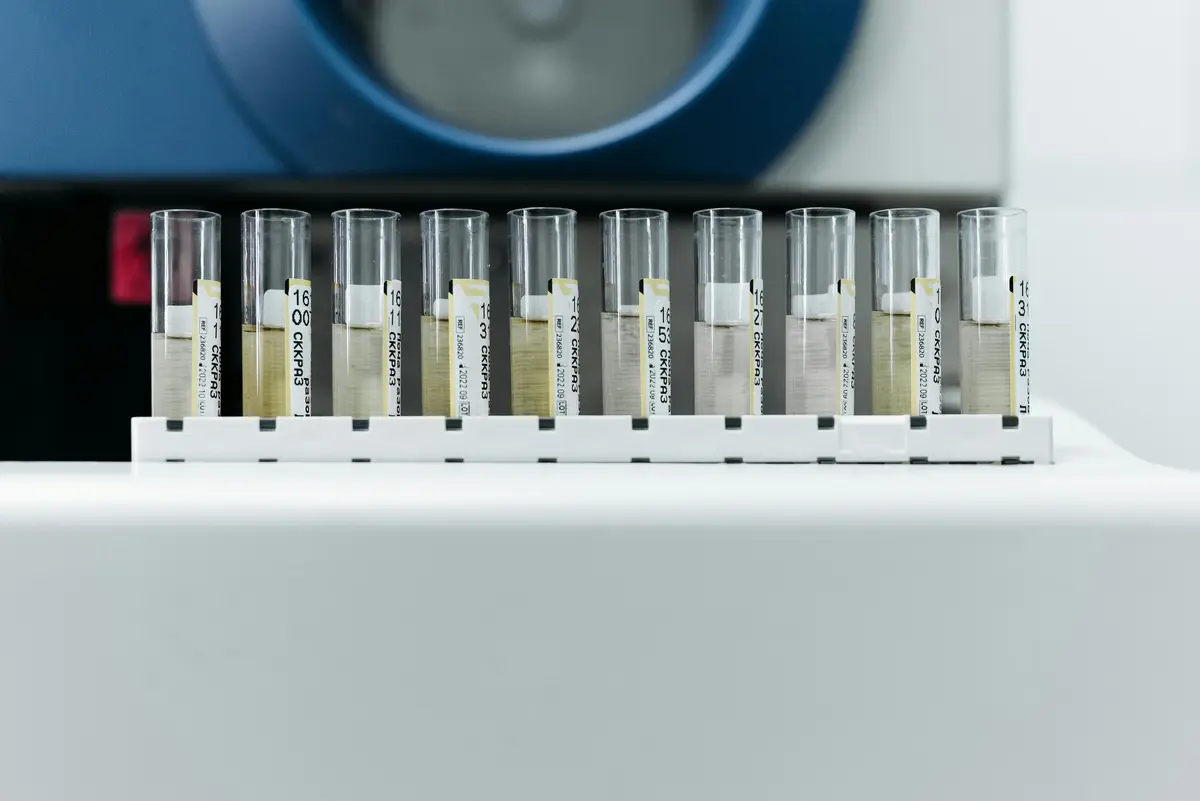

Internal Quality Control (IQC) plays a fundamental role in ensuring the quality of analyzes carried out in clinical laboratories. However, many laboratories face significant challenges when applying traditional methods to routine IQC analysis.
In order to better understand these difficulties, we carried out a survey covering more than 300 clinical laboratories and in this article we will present a detailed analysis of the main challenges faced in each of the three methods used: manufacturer-assigned range, Spreadsheets and LIS/Equipment.
By exploring these issues, we will also seek to provide effective solutions to overcome such obstacles and improve internal quality control in clinical laboratories.
Method: Manufacturer’s Stated Range
How does Internal Quality Control (IQC) work according to the Manufacturer’s Stated Range?
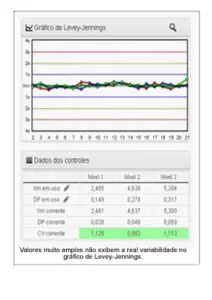
Internal Quality Control (IQC) by manufacturer-assigned range is based on the table provided by the manufacturers, containing the minimum and maximum desirable values for each analyte. Many professionals adopt these ranges as control limits for their laboratories, believing that this approach is sufficient to perform IQC adequately. However, manufacturers highlight the need for each laboratory to establish its own mean and standard deviation values to determine control limits.
Although manufacturers emphasize that the values indicated in the package insert should only be used as an initial reference, many professionals continue to perform IQC only based on this suggested range, without defining their own limits. This limited practice compromises the effectiveness of IQC, since the manufacturer’s stated range may not be suitable for the particularities of each laboratory.
Main challenges reported when using the Insert Range for IQC:
- Presents values as a reference for starting the control, which should only be used for the first 20 analyses;
- Does not apply Westgard's multiple rules, Mean, Standard Deviation and Coefficient of Variation calculations;
- Many processes involved and more time spent on execution;
- Does not find trends and other changes noticed in the analysis of the Levey-Jennings graph;
- There is a lot of information to deal with manually, leading to incomplete and tiring evaluations;
- It takes a long time to evaluate the type of error. Unable to identify the type of error.
- There is no way to perform and record critical analysis;
- Lack of personnel to carry out the process;
- Difficulty in analyzing controls daily for all analytes;
- There is no effective recording, there is no history of occurrences.
- It is considered the most precarious method and is not good control.
Method: Spreadsheets
How does Internal Quality Control (IQC) work through spreadsheets?
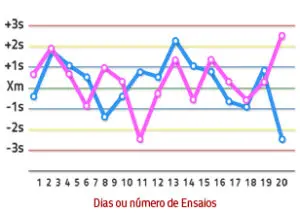
Electronic spreadsheets have been used in Internal Quality Control (IQC) due to the ease with which they allow statistical calculations to be carried out. Some IQC researchers realized the potential of building spreadsheets that, when properly configured with statistical functions, could provide the results needed to evaluate the stability of the analytical system, at an affordable cost.
However, an important limitation of this method is that running IQC through spreadsheets requires daily actions for several analytes, in addition to the data entry, analysis and reporting processes. Electronic spreadsheets were developed for generic applications, which may result in little adaptation for the clinical laboratory, when seeking effectiveness in controlling analytical imprecision.
Main challenges reported when using Spreadsheets for IQC:
- Allows graph plotting without the possibility of treating more than one control level simultaneously, for concomitant analysis;
- Large amount of data to process manually;
- There are many typing errors that are only noticed in retrospective analysis. Spreadsheets are fragile when it comes to data;
- Depends on higher-level knowledge to evaluate data. They consume valuable professional time;
- Does not allow for the best critical analysis. Does not have intelligence for interpretations in IQC;
- It is very complex to handle the numerous quantitative tests, with records and reports, with renewal every month for each analyte;
- Does not allow for the different and necessary reports.
Method: LIS/Equipment
There are many devices with different control software, each with its own screens and reporting modes. To better analyze the contributions of these software to IQC, we usually ask professionals some questions about their experiences with the equipment to practice good control:
- Does the equipment allow you to use the package insert data at one stage and then start using your own values for limits on the Levey-Jennings graph?
- Does the equipment software exclude runs out of control (outliers) from the series when calculating current values?
- Do you receive comparisons with CV values and maximum imprecision from biological variation tables to evaluate your own imprecision?
- Can you record occurrences, comments and interventions in the system, relating to analytical runs?
- Do you have sequential assessments for detection of systematic errors (4:1s, 7x and 10x rules) for consecutive days?
- Can you specify different sets of rules for different analytes on the same instrument?
- Can you look at the analyte history and check previous outlier runs and what corrective measures were taken?
- If the laboratory has manual techniques for quantitative tests, how do you handle IQC data from these tests in a practical and correct way?
- Can you issue IQC reports for long periods of time to demonstrate to the Health Surveillance?
- Can you access data from all your equipment (Biochemistry, Hematology, Hormones, Blood Gas Analysis, Immunology) from different locations, from your room or even from another building, from another technical area?
If you answered NO to three or more of these questions, you are certainly not doing good control.
Main challenges reported when using LIS/ Equipment for IQC:
- Data provided by equipment with Control information presented separately;
- Little standardization of the analytical environment;
- Compilation and manual joining of data from each equipment for critical analysis;
- Does not perform a comparative analysis of laboratory imprecision, measured by the Coefficient of Variation;
- Limited view of the analytical environment;
- Demands daily commenting and logging actions for numerous analytes, analysis logs and reports.
In summary, traditional methods present common challenges, such as lack of automation, limitations in statistical analysis, complexity in data processing, dependence on manual processes, lack of a comprehensive view of control and difficulty in maintaining standardization and stability.
Faced with these difficulties, it is necessary to seek more efficient solutions, such as the use of a system for Internal Control, thus ensuring compliance with regulatory requirements and quality standards, while simplifying the process and providing more reliable results.
What does an effective method for Internal Quality Control need to have?
An effective method for IQC is one that provides efficient, accurate and reliable execution of internal control, allowing the identification of problems, the implementation of continuous improvements and compliance with regulatory standards.
QualiChart is the only complete system for internal quality control. A tool that does all the work of statistical calculations for IQC, with automatic alerts of nonconformities according to Westgard's multiple rules, carrying out Statistical Control of Analytical Processes, pointing out errors and deviations in the laboratory analysis routine, complying with the requirements of RDC 786 ANVISA and accreditation programs.
System Benefits for IQC in the clinical laboratory:
- Monitoring in one place of routine data from all monitored equipment and units;
- Automatic test of Westgard's Multiple rules, calculation of Mean, Standard Deviation and Coefficient of Variation;
- Automatic plotting of the Levey-Jennings Graph;
- Standardization of control processes, individualizing each analyte;
- Displays nonconformity alerts and classifies the types of errors;
- Assists in finding the root cause of nonconformity and identifying a solution;
- Records correction actions to control recurrence. Compiles into history;
- Complete history of each analyte and non-conforming occurrences, violated rules and corrective measures, for guidance in case of error recurrences;
- Registers and controls interventions on each piece of equipment, in accordance with the requirements of RDC 786 – Art. 59;
- Meets all the requirements of ANVISA's RDC 786 – 2023.
If you are a quality manager or laboratory professional, and are still in doubt about which method to implement for IQC in the laboratory, we have prepared a online material with the analysis of the issues regarding each of the methods used and their comparisons.
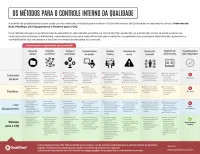
A reference for laboratory professionals, based on reported challenges, addressing real pain points and routine practice, helping them understand how they can overcome the restrictions of traditional methods, adopting more efficient resources to improve the quality of analytical processes, facilitate decision-making and increase their confidence in the results for patients.